
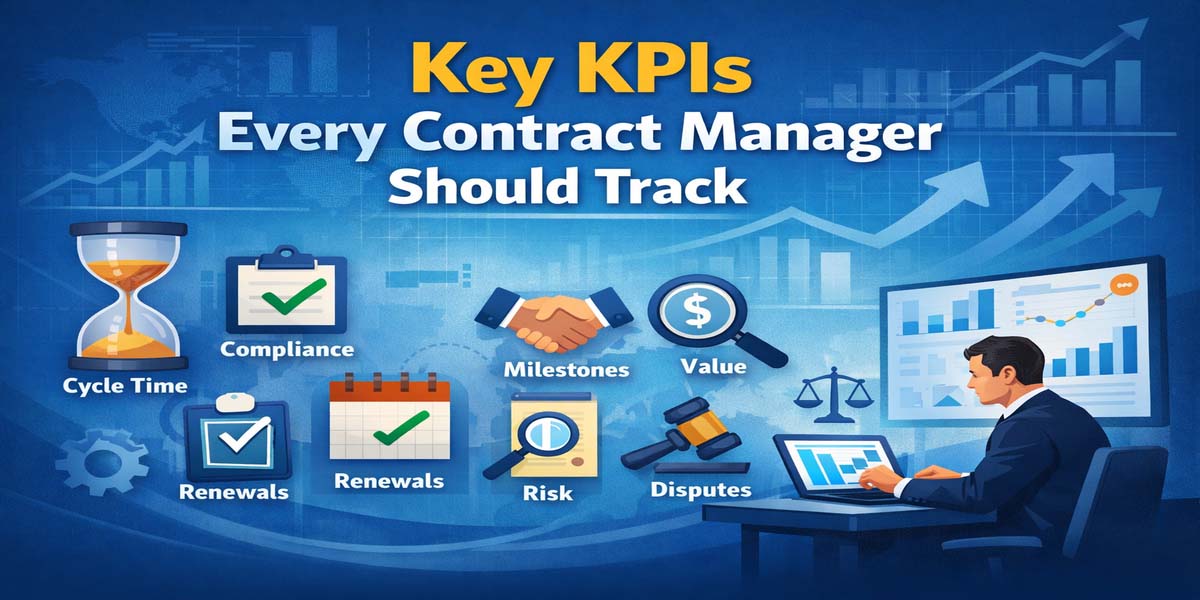
In today’s business environment, contracts are more than just paperwork; they help manage risk, protect value, and support business performance. Contract managers play a crucial role in making this happen, and Key Performance Indicators (KPIs) help demonstrate their impact.
By tracking the right KPIs, contract managers can clearly see how contracts are performing across key areas such as revenue, compliance, suppliers, and risk. These measurements help identify issues early, support better decisions, and ensure contracts are created, managed, and completed effectively, while showing how strong contract management supports overall business goals.
The Most Essential Points to Track
1. Contract Cycle Time
Measure the time required to draft, review, approve, and execute a contract.
Rationale: Extended legal review timelines can delay deal closure, defer revenue, and slow service delivery, leading to business frustration. Reducing contract cycle time enables faster agreements, improved operational efficiency, and quicker business value realization.
2. Compliance with Policies and Regulations
Assess the extent to which contracts adhere to internal policies and applicable legal and regulatory requirements.
Rationale: Gaps in compliance increase exposure to audits, penalties, and legal risk, while strong compliance safeguards the organization and helps prevent costly errors (Top Legal).
3. Obligation and Milestone Fulfillment
Monitor the timely fulfillment of key contractual obligations, including payments, deliverables, and service-level commitments.
Rationale: Missed milestones can result in penalties, disputes, and strained relationships, and repeated delays signal ineffective contract management.
4. Renewal and Expiration Management
Track whether contract renewals and expirations are identified, reviewed, and addressed on time.
Rationale: Missing renewal deadlines can lead to service disruptions, revenue loss, or automatic extensions under unfavorable terms.
5. Value Realization vs. Contracted Value
Evaluate the gap between the value anticipated under a contract and the value realized.
Rationale: Overlooked terms, pricing discrepancies, or unexercised rights can gradually diminish contract value. Measuring this gap helps identify lost revenue opportunities and demonstrates the financial importance of proactive contract management.
6. Contract Disputes
Track the frequency of contract-related disputes or escalations.
Rationale: A high volume of disputes can signal unclear terms or misaligned expectations, while fewer disputes typically reflect well-drafted, balanced, and effectively negotiated contracts.
7. Cost and Efficiency of Contract Management
Assess the cost of managing individual contracts and the extent to which digital tools support contract processes.
Rationale: Heavy reliance on manual processes drives up costs and increases the risk of errors, while greater automation improves efficiency, reduces risk, and allows teams to focus on higher-value activities.
8. Utilization of Negotiated Terms
Monitor whether negotiated benefits such as discounts, service credits, or flexible terms are actually applied in practice.
Rationale: When negotiated terms go unused, contractual value is lost. Tracking this ensures the business fully realizes the benefits it negotiated.
In Conclusion
KPIs are more than performance metrics; they help drive real change. When contract managers track the right KPIs, they gain better visibility, more control, and greater trust across the business. The result is a shift from reactive firefighting to proactive deal enablement, positioning contract management as a strategic function that drives efficiency, reduces risk, and creates value.
Ready to take control of your performance metrics? Schedule a complimentary consultation to discuss how ABiz can help.
Author: Prajakta Ramteke, Senior Contract Specialist, ABiz Corporation, Contract Management Innovators.