

Implementing a Contract Lifecycle Management System (CLMS) is one of the most impactful investments a contract management organization can make. The right system can streamline workflows, improve compliance, reduce risk, and provide the visibility needed to turn contracts from static documents into strategic business assets.
Many organizations learn the hard way that technology alone does not solve all contract management challenges; a CLMS is only as effective as the foundation on which it is built. Without the right processes, data, people, and commitment in place to support its powerful execution, even the best systems will underperform. This blog discusses the critical factors to consider when determining organizational readiness.
Before the RFP: Five Areas That Predict CLM Success
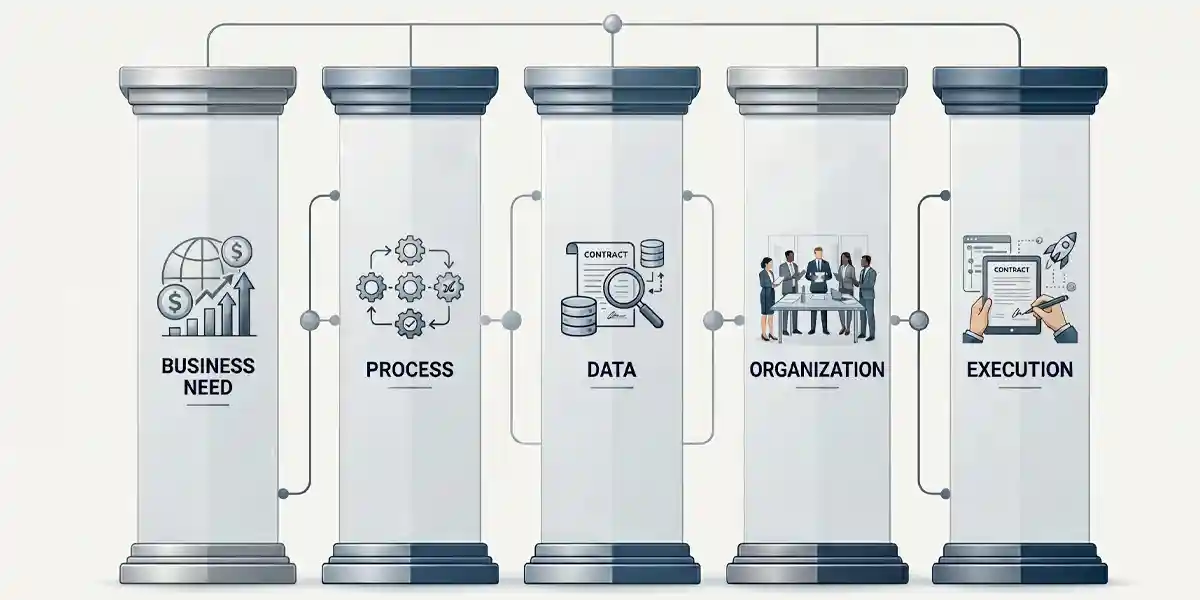
Before you begin evaluating vendors or building a CLMS business case that gets approved, it is worth stepping back to assess whether your organization is truly ready. Based on our experience guiding organizations through every phase of the CLM transformation, here are five critical areas that determine the success outcomes of your CLM implementation.
1. Understand the Business Need
A successful CLMS implementation starts with a clearly defined business case that identifies the specific challenges your organization faces with existing contract processes. Is efficiency, compliance, cost savings, risk reduction, or a combination driving the implementation, and is there stakeholder alignment? Without that alignment, implementation projects can stall, lose funding, or fail to gain the adoption needed across Legal, Procurement, IT, and Finance.
Questions to Consider:
- What are the primary drivers behind this initiative?
- Do key stakeholders agree on the need for a CLMS?
- If you already have a system in place, how well does it support your current business needs, and what are its limitations?
2. Evaluate Your Process Readiness
A CLMS will automate, not fix, any broken processes, such as a lack of standardized workflows for contract creation, approval, execution, and post-award management. Implementing a system on top of flawed processes will only amplify existing inefficiencies.
Before going live with a CLMS, take stock of your current processes. Identify the bottlenecks: contract delays, missed milestones, difficulty locating agreements, and inconsistent approval paths. A CLMS can address these pain points, but only if the underlying processes have been documented and optimized first.
Questions to Consider:
- Do you have standardized, documented workflows for pre- and post-signature contract management?
- What are the specific bottlenecks in your current process that you need to resolve?
3. Assess Your Content and Data Readiness
Data migration is one of the most underestimated elements of CLMS implementation. If your existing contracts are scattered across shared drives, email inboxes, filing cabinets, and individual desktops, the effort to inventory, organize, and migrate that data will be significant.
Beyond migration, consider the state of your contract templates, clause libraries, and playbooks. Have your template agreements been reviewed for readiness to load into a centralized library? What about your playbooks? Do you have an opportunity to streamline and reduce the number of templates and clauses to simplify your processes? Getting this content in order before implementation will dramatically improve both the speed and success of your rollout.
Additional Questions to Consider:
- Do you have a clear inventory of existing contracts, and are they accessible for migration?
- Have you reviewed your templates and identified standard clauses for a centralized library?
- Are you currently using playbooks for negotiation and drafting, or will these need to be created as part of the implementation?
4. Confirm Organizational Readiness
Even the best CLMS will struggle without organizational support. Successful implementations require a dedicated internal champion who can drive adoption, resolve internal roadblocks, and maintain momentum. Equally important are cross-functional alignment and budgetary ramifications. Implementing and maintaining a CLMS involves not just the software license, but also configuration, migration, training, and ongoing system management. Organizations that plan for these costs upfront avoid the most common implementation pitfalls.
Questions to Consider:
- Have you identified an internal champion or owner for this initiative?
- Are your Procurement, IT, Legal, and Finance teams aligned on the system’s technical and compliance requirements?
- Have you allocated a budget that accounts for the full scope of implementation and ongoing maintenance?
5. Plan for the Time Commitment and Expertise Required
A CLMS implementation requires sustained engagement from both IT and contract management teams. It demands careful planning, dedicated resources, and ongoing collaboration across functions. Many organizations underestimate the level of effort involved, which can lead to delays, scope creep, and frustration.
Assess whether your current staff can dedicate the necessary time, or whether you will need additional temporary or permanent third-party support or expertise. Consider your post-implementation needs as well: who will manage and maintain the system, train new users, and continuously optimize workflows? Having a plan for building internal expertise ensures the system delivers value well beyond go-live.
Questions to Consider:
Can your current staff dedicate the time required, or will you need additional support?
- Do you have a plan for building internal expertise post-implementation?
- How will you measure success during and after the implementation process?
Know Before You Invest: Measure Your CLM Readiness
Readiness is not about having every answer today. It’s about understanding where you are and what needs to happen next. At ABiz Corporation, our practitioner-led team has guided organizations through every phase of the CLMS journey, from system selection to implementation and ongoing optimization.
The ABiz CLMS Readiness Diagnostic Service is designed to evaluate your organization across the five critical readiness areas discussed above. The assessment provides a clear view of your current readiness level, highlights potential gaps, and identifies practical next steps to support a successful implementation. As part of the process, our team reviews the findings with you and discusses recommended actions tailored to your organization’s needs. Contact us to learn more about this powerful service.
Not sure if your organization is truly ready for a CLMS implementation?
Take advantage of our complimentary assessment to ensure you start on the right path and stay on it every step of the way.
Take the CLMS Readiness Assessment
Author: Nancy Nelson, President, ABiz Corporation, Contract Management Innovators.