
Why Most Organizations Skip This Step (Until It’s Too Late)
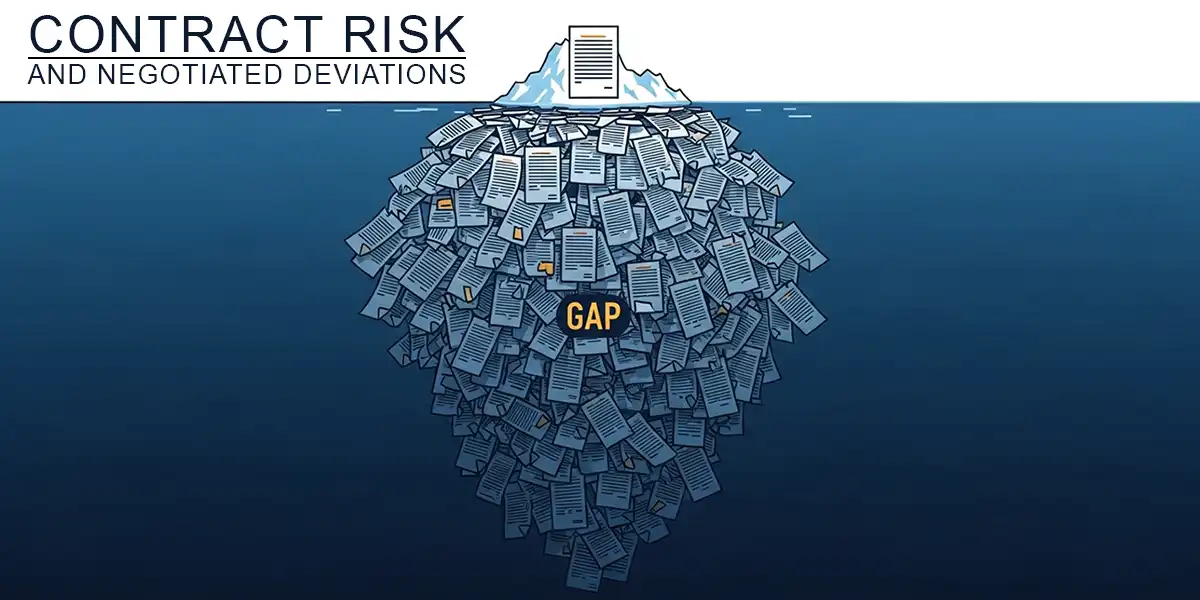
Contracts rarely fail at the moment they’re signed or because they were “poorly” written. They fail quietly over time. What was designed and approved in your templates, playbooks, and legal standards to protect your business can get eroded during negotiation if clauses are edited, softened, removed, or rewritten. Over time, these edits, maybe hundreds or even thousands of executed contracts that govern your business, start to tell a very different story than the standards meant to protect it. That gap is where hidden risk lives.
Contract gap analysis brings that risk into focus by revealing the differences between what your organization intended to sign and what was ultimately agreed. In this blog, we explore what contract gap analysis is, why it has become essential to modern contract management, and how it helps organizations uncover hidden exposure before it turns into real impact.
What Is Contract Gap Analysis, Really?
At its core, a gap analysis is a simple but revealing question: How does this signed contract differ from our approved standard?
A gap analysis systematically compares executed agreements against approved templates, clause libraries, playbooks, and policy requirements to identify deviations. This analysis evaluates whether contracts align with an organization’s standard templates, risk policies, regulatory obligations (e.g., GDPR, HIPAA), other industry mandates, or negotiated positions.
In any gap analysis, the goal is not to re-review the entire contract; rather, it is to pinpoint what changed, what’s missing, and assess the risks those changes introduce.
Organizations are using AI-enabled gap analysis in areas such as:
- M&A due diligence to rapidly assess inherited contract risk
- Vendor compliance reviews for data protection and regulatory obligations
- Template modernization initiatives
- Playbook creation based on real negotiation behavior
- Contract lifecycle management (CLM) system optimization and automation
It becomes a foundational capability that strengthens every stage of the contract lifecycle.
Why Gap Analysis Matters More Than Ever
In growing organizations, contract volume increases faster than visibility into it. This is partly because contracting is no longer a purely legal function; it now spans sales, procurement, HR, partnerships, compliance, IT, and more. As a point of context, large corporations may manage upwards of 350 contracts weekly (Loio), with enterprise corporations consistently managing 20 to 40K active contracts (B2B Reviews).
Legal teams review agreements one at a time, often under time pressure. Negotiated changes are approved in context but are rarely systematically tracked across the portfolio. Over time, patterns can emerge that the broader team doesn’t see, such as:
- Liability caps slowly trending upward
- Data protection language weakening across vendors
- Termination rights becoming inconsistent
- Outdated clauses remaining in circulation
- Certain terms being negotiated away in nearly every deal
While these changes may seem manageable individually, viewed collectively, they reveal how your organization’s risk profile has been reshaped. This is compounded when multiple business units negotiate terms, address regional differences, incorporate regulatory clauses, or handle ongoing amendments and renewals. Discovering this through a dispute, audit, or compliance review does not put an organization in a position of strength. A gap analysis lets you look ahead rather than being forced to look backward to where disparities occurred.
From Manual Review to Intelligent Comparison
Historically, comparing a standard template to a negotiated contract has been labor-intensive and inconsistent. It required line-by-line review, close attention to subtle wording changes, and a strong understanding of how different phrasing can alter legal meaning. The same concept—such as limitation of liability or termination rights—can be expressed in multiple ways, making deviations difficult to detect consistently. While individual contracts may receive careful review, tracking patterns of change across dozens or hundreds of agreements has been nearly impossible using manual methods.
This is where AI has fundamentally alleviated the gap analysis challenge, bringing power to established corporate standards.
AI-enabled tools go beyond keyword scanning, using natural language processing to understand legal language context. Using AI, contract or legal teams can:
- Instantly compare executed contracts against approved templates
- Flag deviations, omissions, and added clauses
- Highlight changes in risk-sensitive areas like liability, confidentiality, indemnity, and termination
- Analyze hundreds or thousands of agreements in minutes
- Report on pattern deviations across the contract portfolio and track via dashboards
Previously, as contract volume has scaled quickly, visibility into what has actually been agreed to has not kept pace. However, what previously took weeks of legal review can now be surfaced in hours, improving the value of every contract in the portfolio while reducing risk.
Essentially, Human Insight + AI Speed = The Ideal Model.
The most effective AI-driven gap analysis programs pair large-scale automated comparison with legal insight. AI surfaces the deviations; professionals assess materiality and business impact. The result is a meaningful shift from reactive document review to proactive risk management.
- The Hidden Benefits Organizations Don’t Expect
As we mentioned earlier, the goal of a gap analysis is to pinpoint what changed, what’s missing, and to assess the risks those changes introduce. Companies that conduct structured gap analysis realize a range of benefits beyond risk detection. Here are several:
1. Templates Improve with Time. A gap analysis identifies where standard language is unrealistic, outdated, or difficult for counterparties to accept. This insight enables templates to evolve and better align with the company’s position, especially in negotiations, where the same clause appears in 80% of portfolio deals.
2. Speed Up Reviews and Approvals. By focusing only on sections of a contract that differ from the standard, a company can significantly reduce review time and internal approval cycles.
3. Amplify Negotiation Strategy. When organizations analyze how clauses are repeatedly modified, they gain insight into how vendors and customers actually negotiate. These patterns reveal where resistance commonly occurs and where risk trade-offs are being made. With that knowledge, teams can refine fallback language, update playbooks, and approach future negotiations with greater clarity and confidence.
4. Strengthen Post-Signature Contract Management. Visibility into non-standard or negotiated terms allows contract managers and operational teams to clearly understand where obligations differ from the norm. This reduces the risk of missed commitments, performance issues, or disputes during contract execution.
5. Strengthen Audit Readiness and Governance. Documented gap analysis creates a clear record of deviations, reviews, and approvals. This structured documentation supports internal controls, strengthens governance practices, and provides defensible evidence during audits or regulatory inquiries.
6. Assess Portfolio-Level Risk. Leadership gains confidence that active negotiated contracts are aligned with corporate standards and has insight into where differences have crept in across the business.
Your Templates Tell One Story. Your Contracts Tell Another.
Without a gap analysis, organizations have limited visibility into how closely executed contracts align with approved standards. Industry research reinforces this reality, with studies showing that a majority of contracts are never systematically monitored for deviations from standard terms. Over time, negotiated changes accumulate, whether through evolving team practices, shifting market expectations, or incremental language introduced by counterparties, quietly reshaping risk exposure across the contract portfolio. Gap analysis brings those deviations to light and restores visibility for the business.
AI makes this process scalable by identifying differences across large contract volumes, while legal expertise makes it meaningful by assessing materiality and business impact. Together, they enable stronger contracts and greater control over how risk, responsibility, and compliance are managed across the organization.
If you are ready to leverage AI for gap analysis to increase contract visibility, improve compliance, and unlock faster deal cycles, we invite you to contact us for a complimentary consultation to identify immediate opportunities to assess your portfolio risk.
Authors: Pooja Gugle and Arti Mahajan, Senior Contract Specialists, ABiz Corporation, Contract Management Innovators.
AI-assisted tools were used to support content development and refinement. The final article reflects the judgment, expertise, and approval of the authors and editorial team.